Product Design • Mobile & Tablet • Internal Platform

Sprout Inventory Management

Edible Arrangements

Designed and led UX for an internal produce ordering and vendor management platform. Built to replace a $1M/year third-party subscription, the system served franchise store owners, vendors, and corporate teams across multiple user types and devices.
Role Creative Direction • UX • UI Design • Iconography • User Interviews • Prototype Testing
Year 2016–2019
Sprout produce management app splash screen

A $1M Problem Worth Solving

The Problem

Edible Arrangements' existing third-party produce ordering system cost over $1 million annually in subscription fees. It was confusing, not fully integrated with internal systems, and failed to centralize or sync data in a timely manner — creating friction for every stakeholder in the supply chain.

The Goal

Build and own a superior replacement system that would eliminate the seven-figure subscription fee, unify the ordering and vendor management workflow, and give franchise owners, vendors, and corporate teams tools that actually fit how they worked.

Four User Types, One Platform

Franchise Store Owners

Mobile ordering, ability to choose local vendors, and side-by-side price comparison — all from a phone.

Existing Vendors

Manage product inventory and shipping, define service areas, upload spreadsheets, and receive real-time delivery alerts.

Corporate

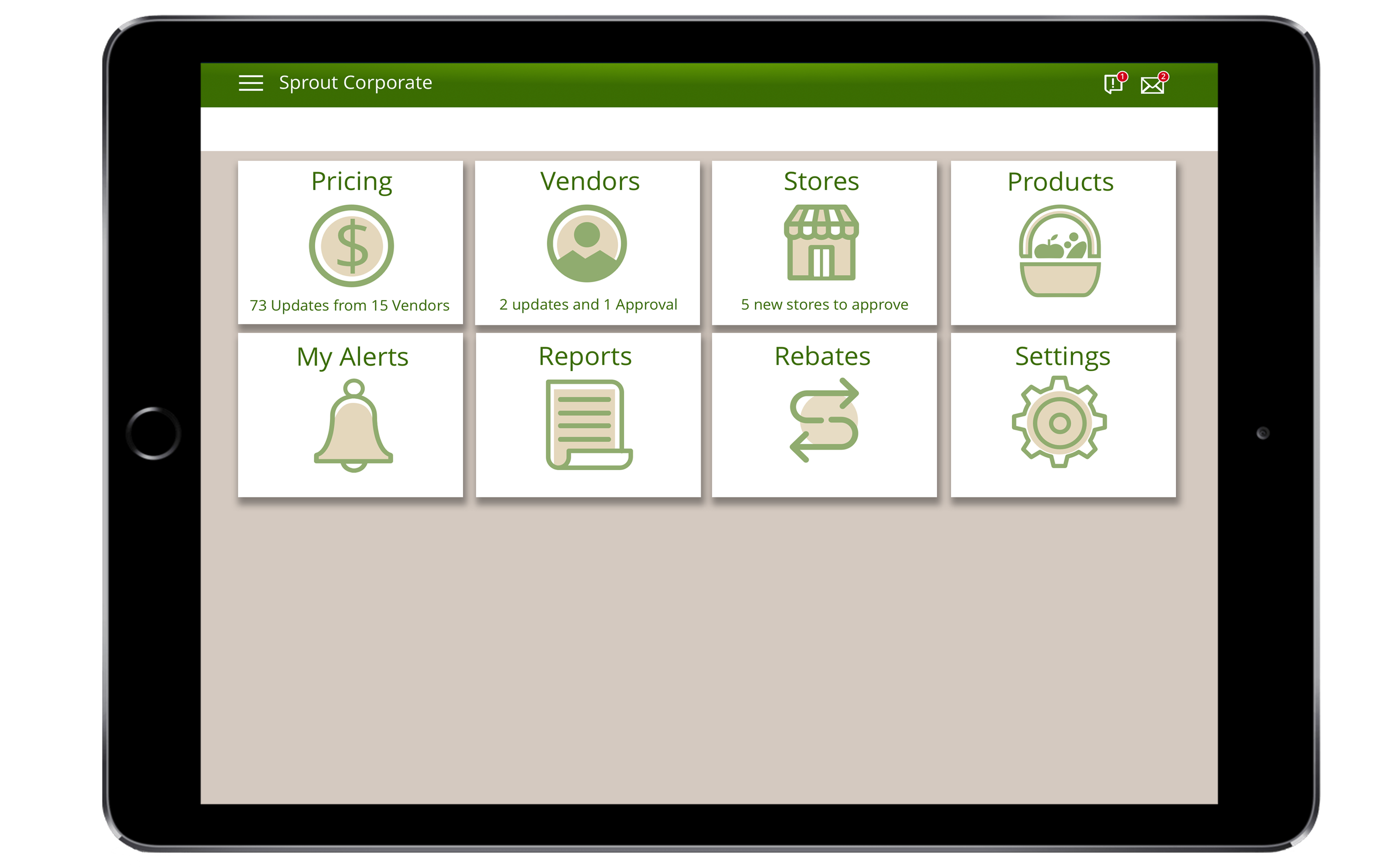
Manage products, resolve disputes, approve new vendor applications, and maintain a bird's-eye view of activity across the network.

New Vendors

Submit for approval, define delivery regions, and upload required documentation — all through a streamlined onboarding flow.

Going Into the Field

Internal Interviews

We interviewed the warehouse's primary database and shipping management resource — the person whose manual, phone-based ordering process the new system would replace. She was skeptical of automation that might affect her role, but open to improvements. Her perspective shaped how we designed the transition to ensure it felt supportive rather than threatening.

Fresh Point Site Visit

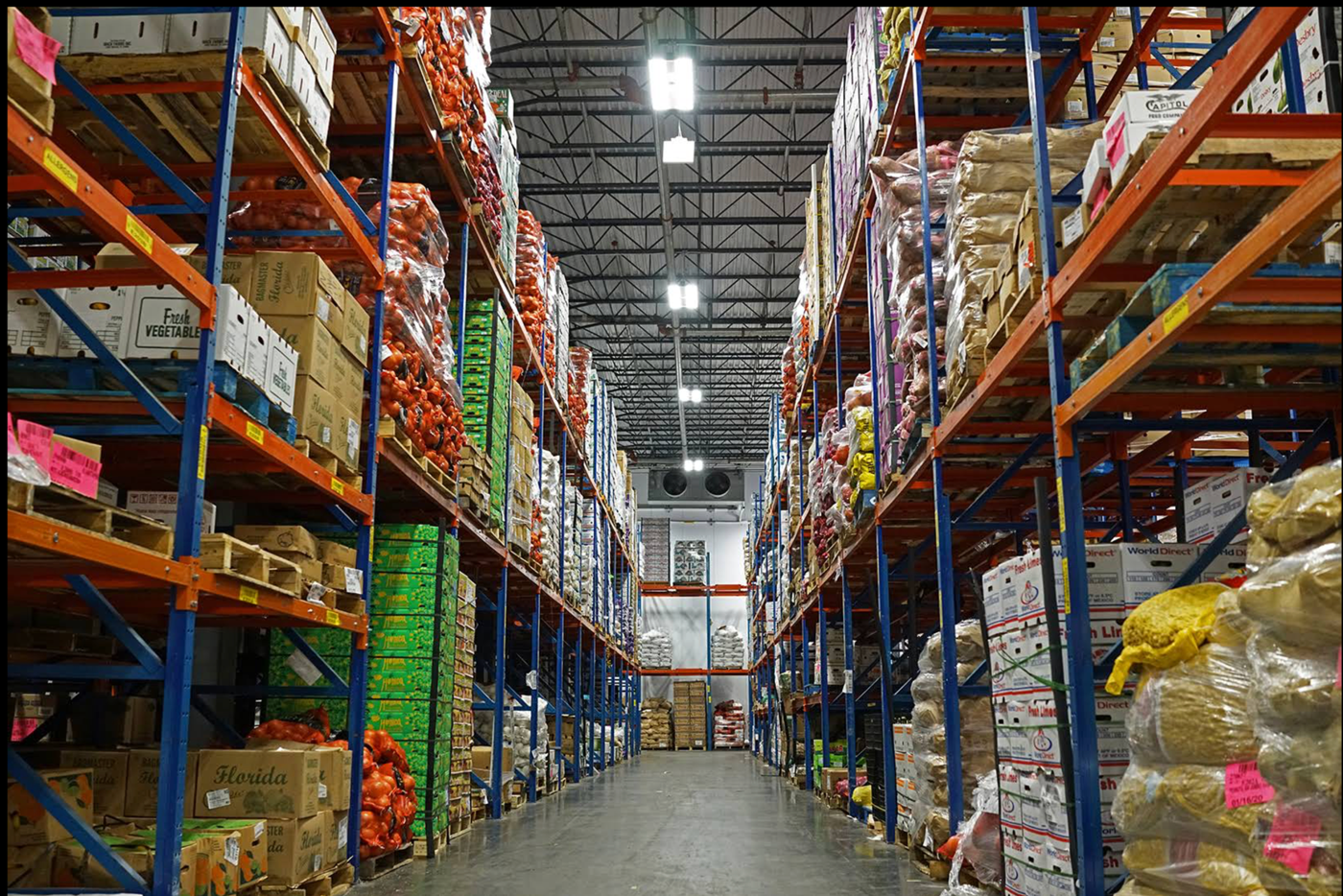
Our team visited Fresh Point — North America's largest exclusively-owned produce distributor, with supply chains across 20+ U.S. states and Canadian provinces. We walked the warehouse floor and observed the ordering and shipping process firsthand, from receiving through dispatch. That direct exposure to vendor operations directly informed the vendor-facing features of the platform.
Team visiting Fresh Point warehouse

What We Built

  1. 01

    Multi-Device Experience

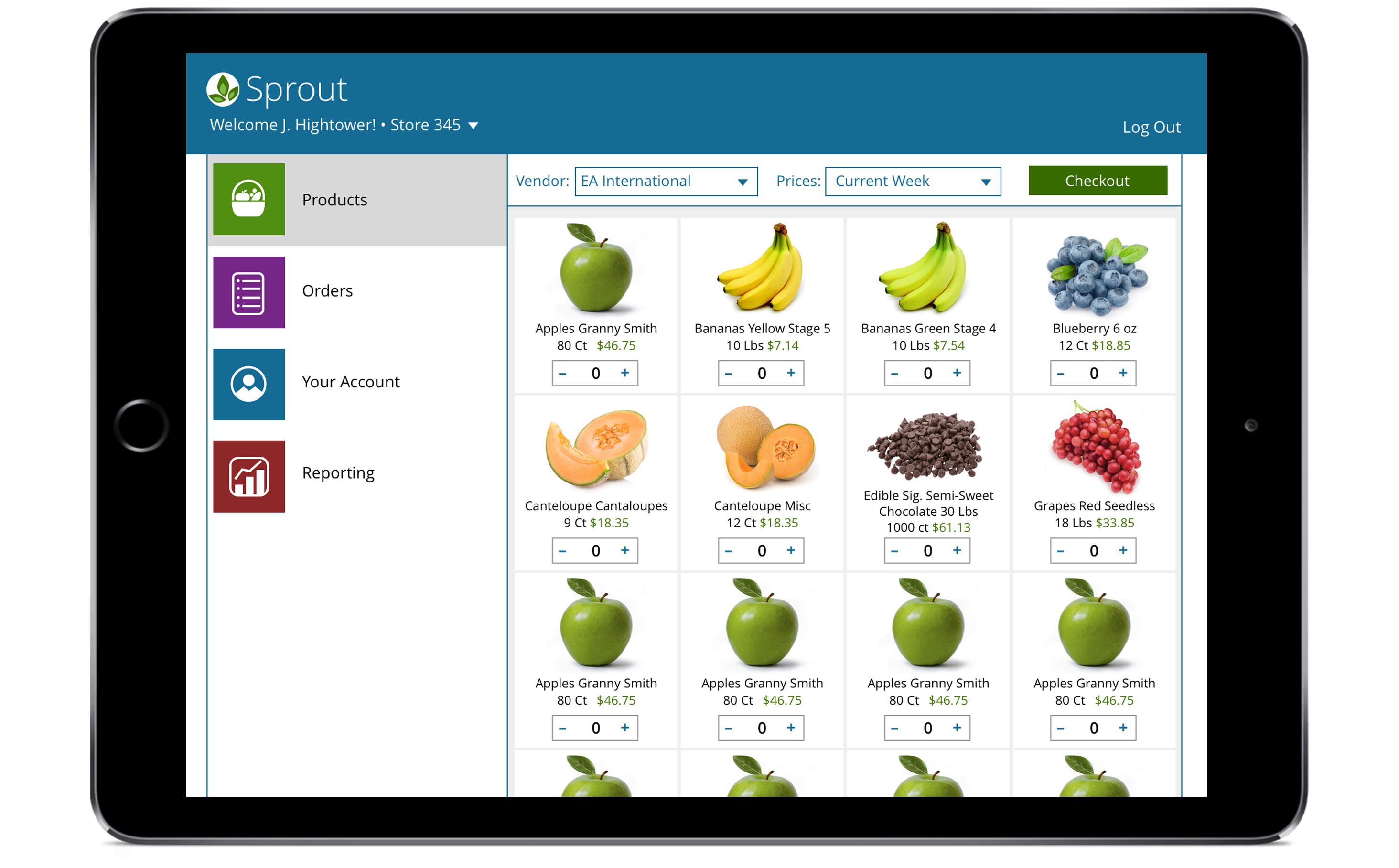
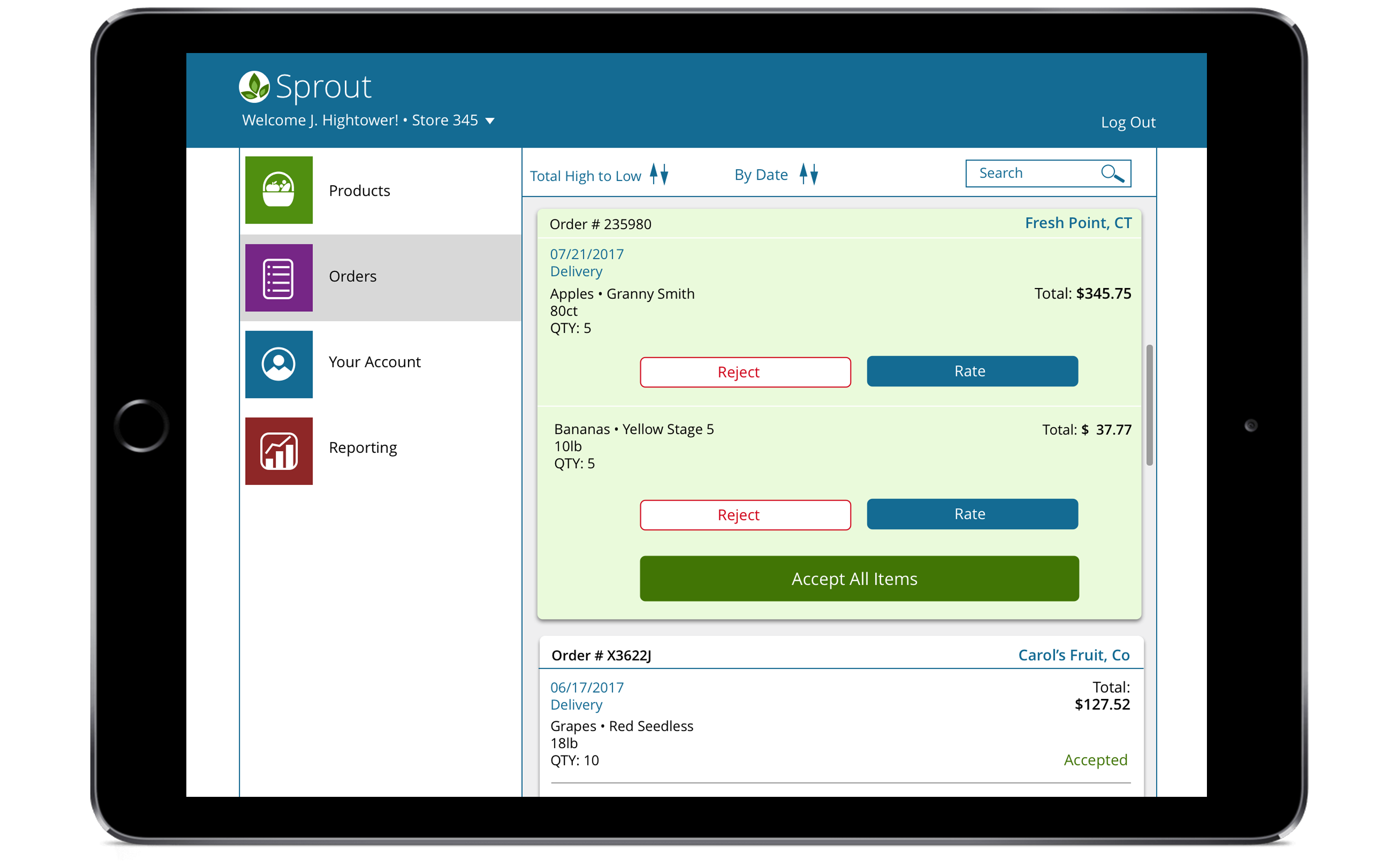
    Tablet interfaces for vendors and corporate teams — allowing vendors to walk warehouse floors and manage inventory on the go. Store owners received a mobile-first view optimized for quick ordering.

  2. 02

    Comprehensive Feature Coverage

    Nearly all features requested by store owners, corporate teams, and vendors were incorporated — including direct internal messaging, delivery alerts, local vendor selection and submission, and CSV export/import.

  3. 03

    Vendor Tools

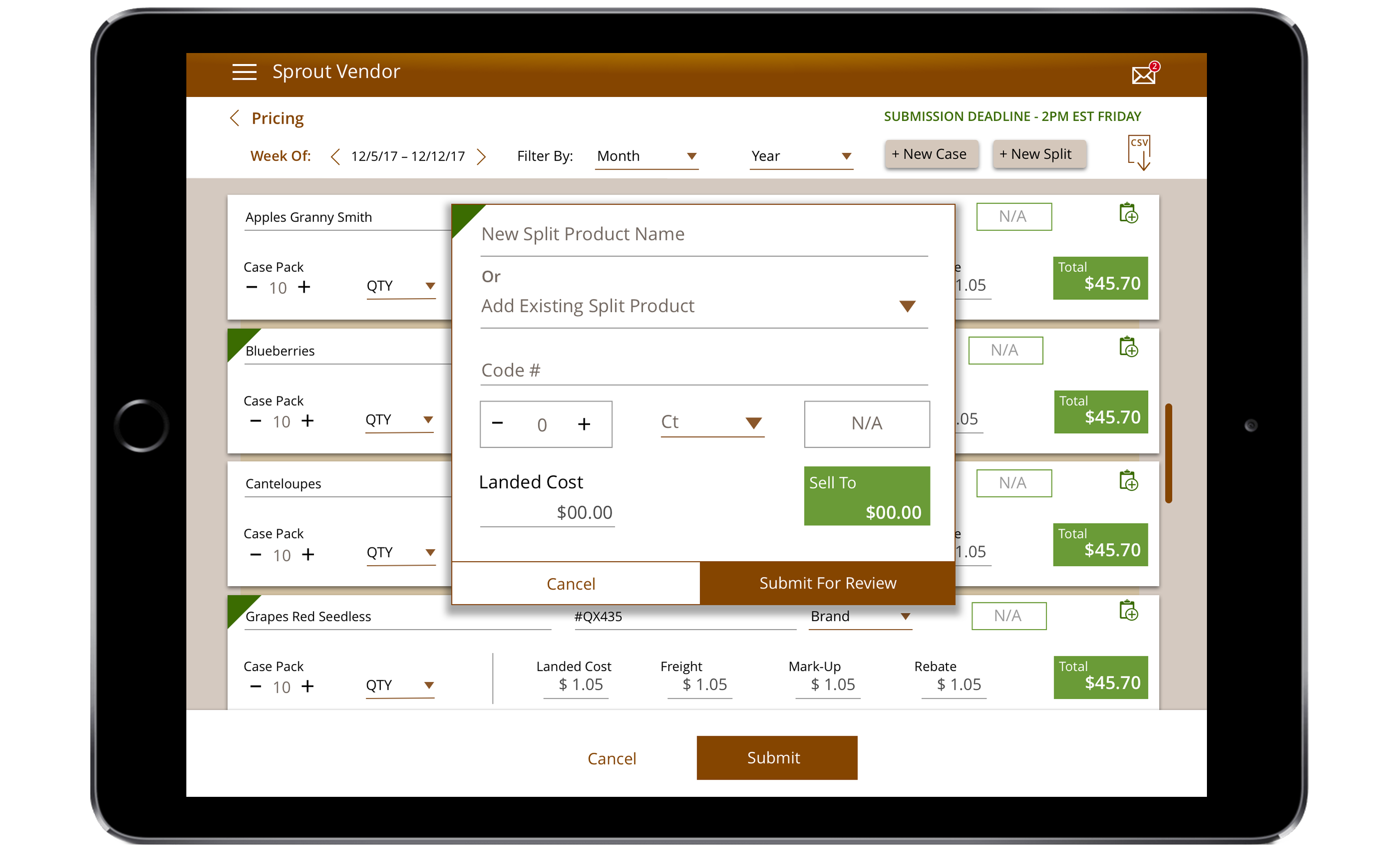
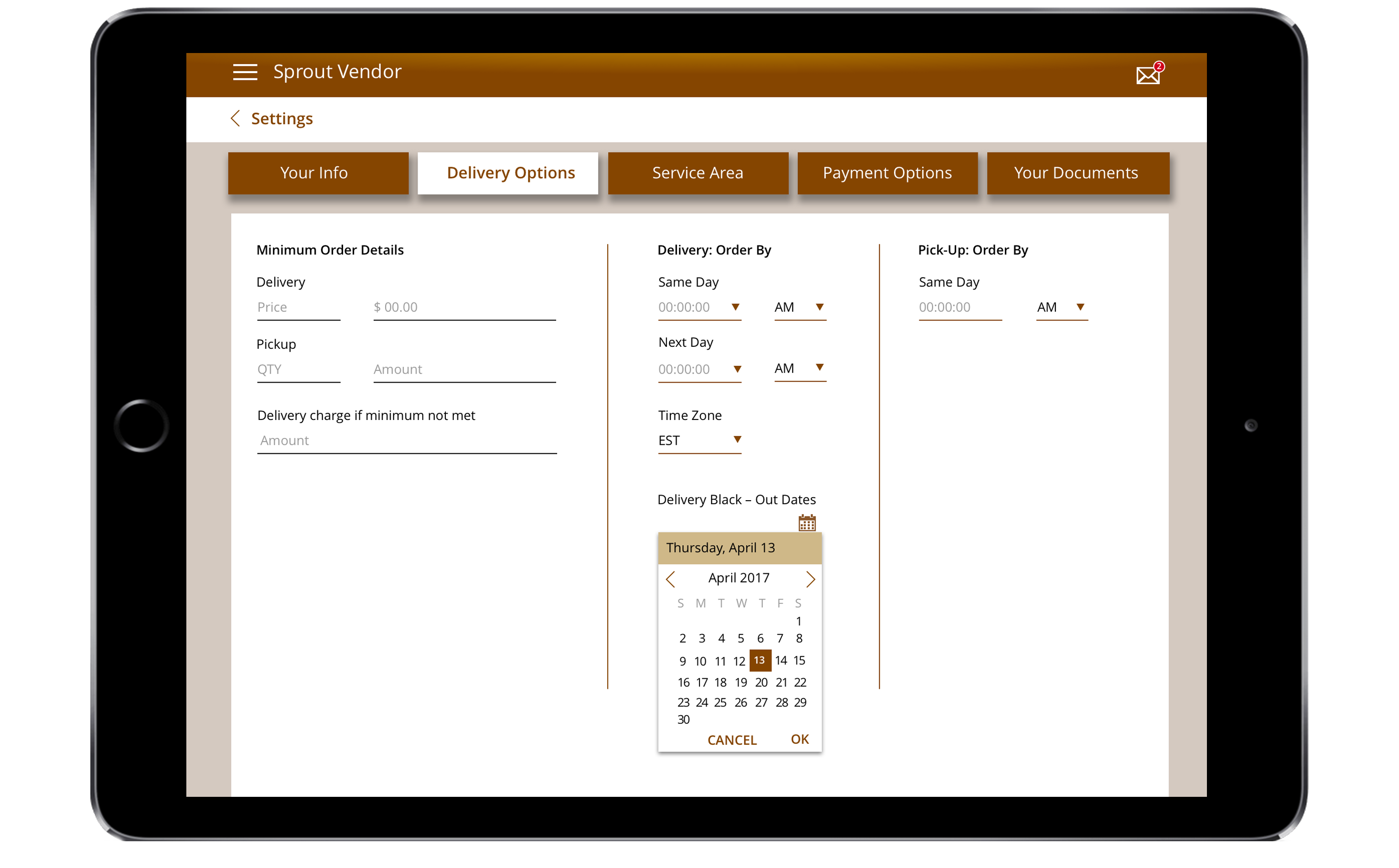
    Vendors can edit pricing, enable split pricing, manage costs, apply discount codes, export CSVs, add notes, track deadlines, redraw their delivery map area, and adjust delivery schedules for holidays.

  4. 04

    Corporate Dashboard

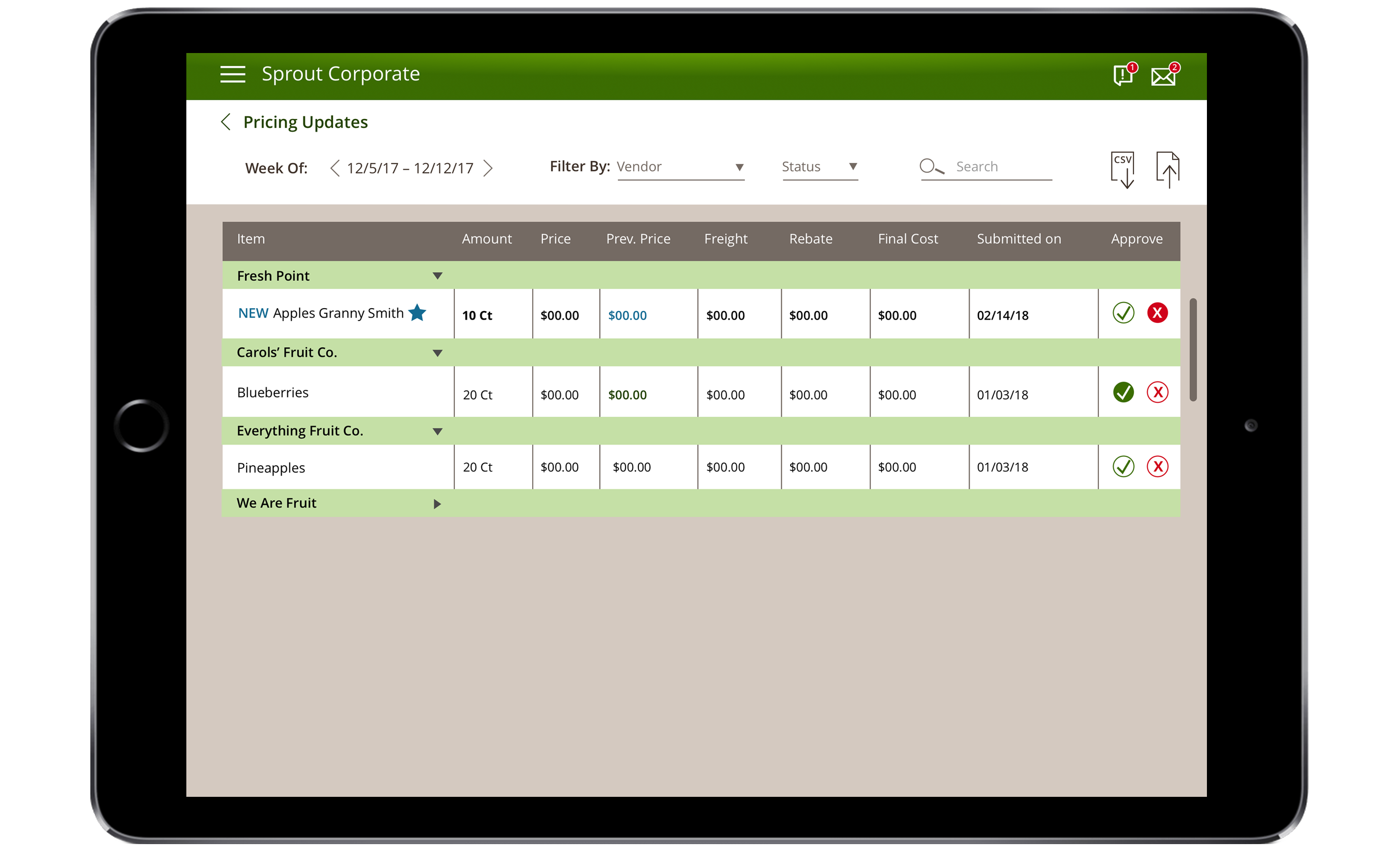
    An easy-to-navigate dashboard with live pricing data. Corporate teams can manage vendor pricing and product submissions with robust filtering and CSV export/import — giving leadership full visibility and control.

  5. 05

    Material Design System

    Clean, material design-based UI with color coding for each user type, making it immediately clear which context you were in regardless of your role in the platform.

Comparison Shop
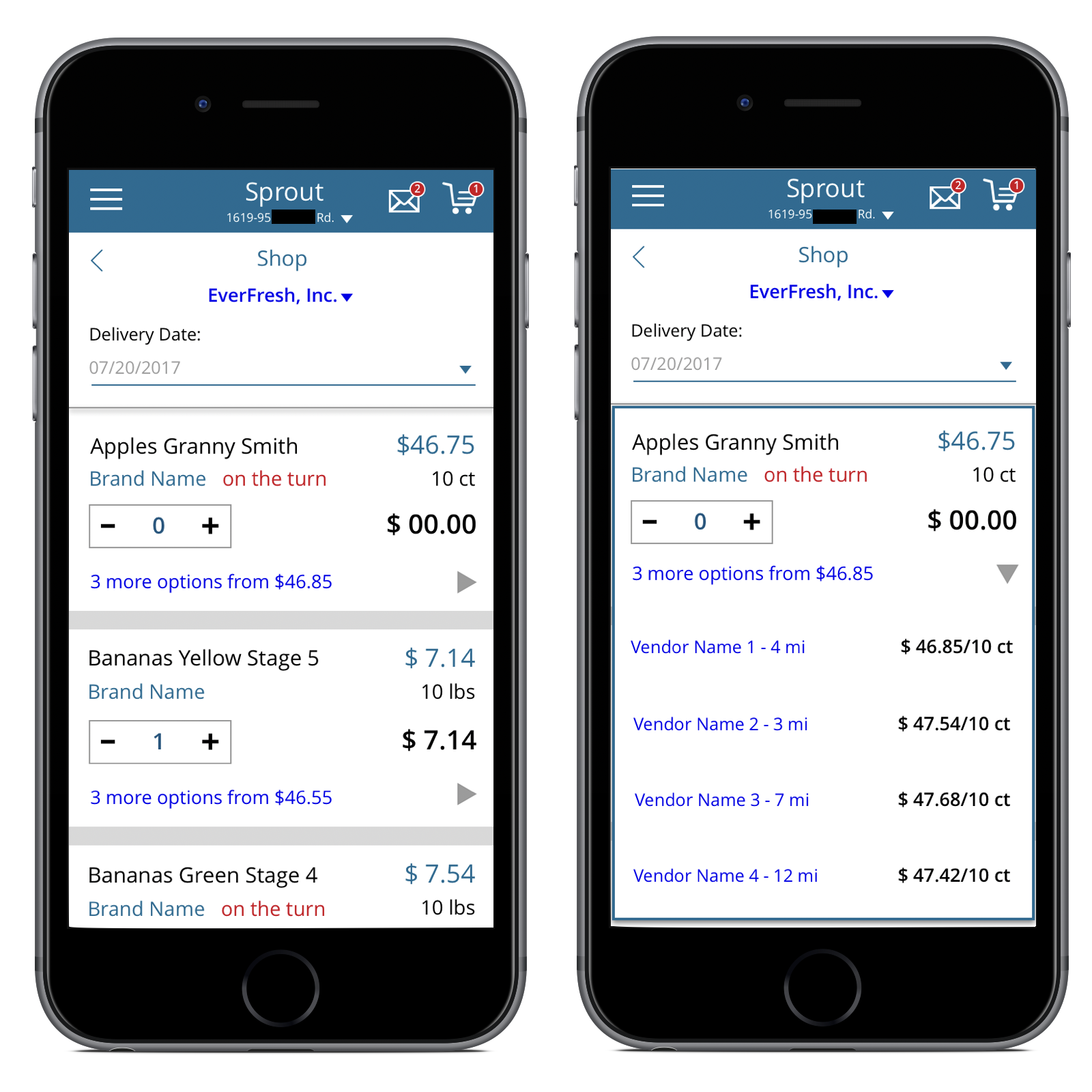
Store owners mobile experience included the much needed ability to price compare from other local vendors with a simple drop-down in product card.
Mobile priorities for store owners included quick ordering, local vendor selection, and price comparison

Order Rejection

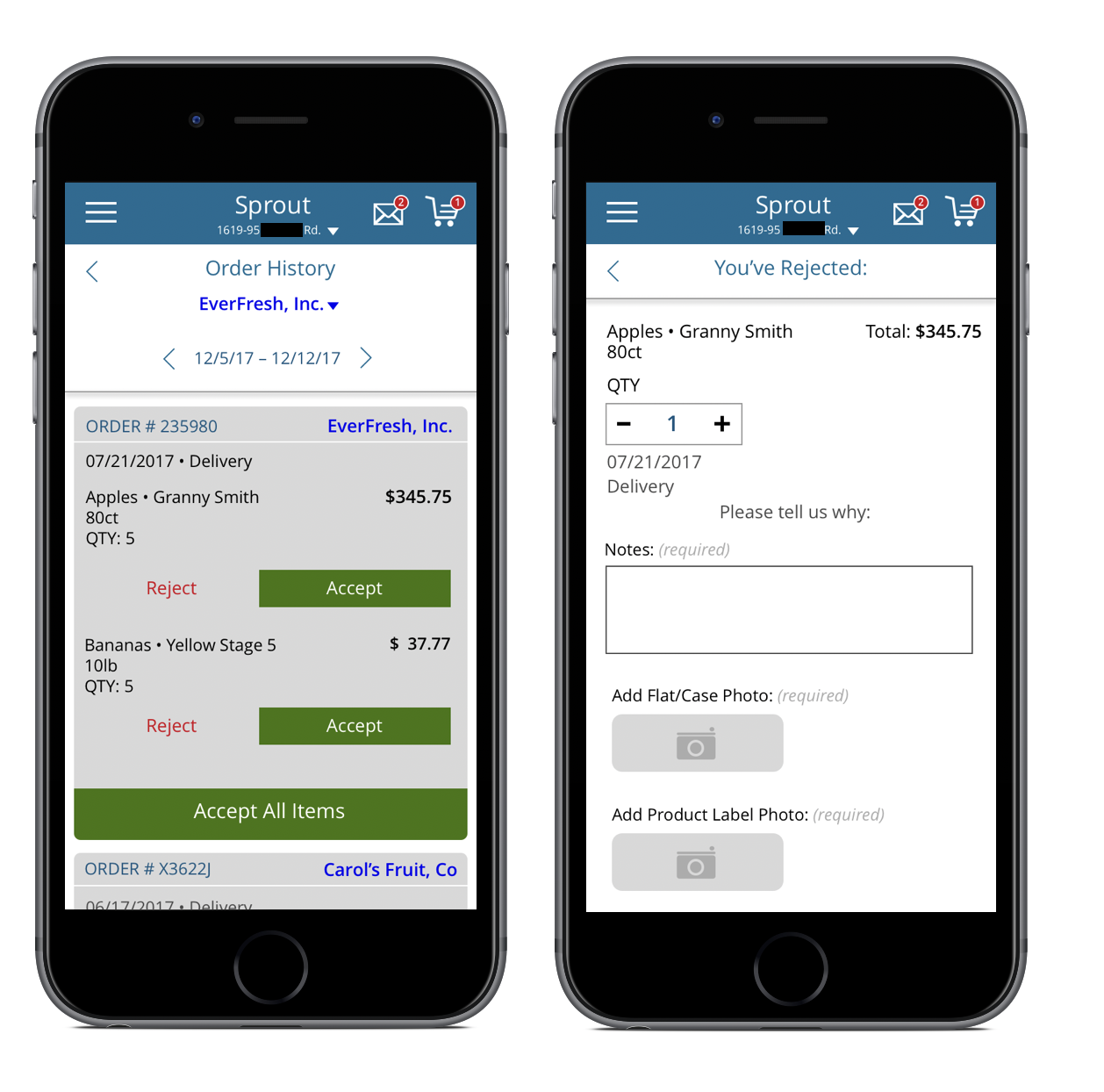
Stores can now reject deliveries directly in the app. Corporate and vendor levels needed stores to attach photos to back up claims of produce conditions.
An order rejection flow was added to the store owner experience, allowing them to reject deliveries and attach photos to back up claims of produce conditions

Tablet Views

Sprout vendor pricing management screen
Ordering
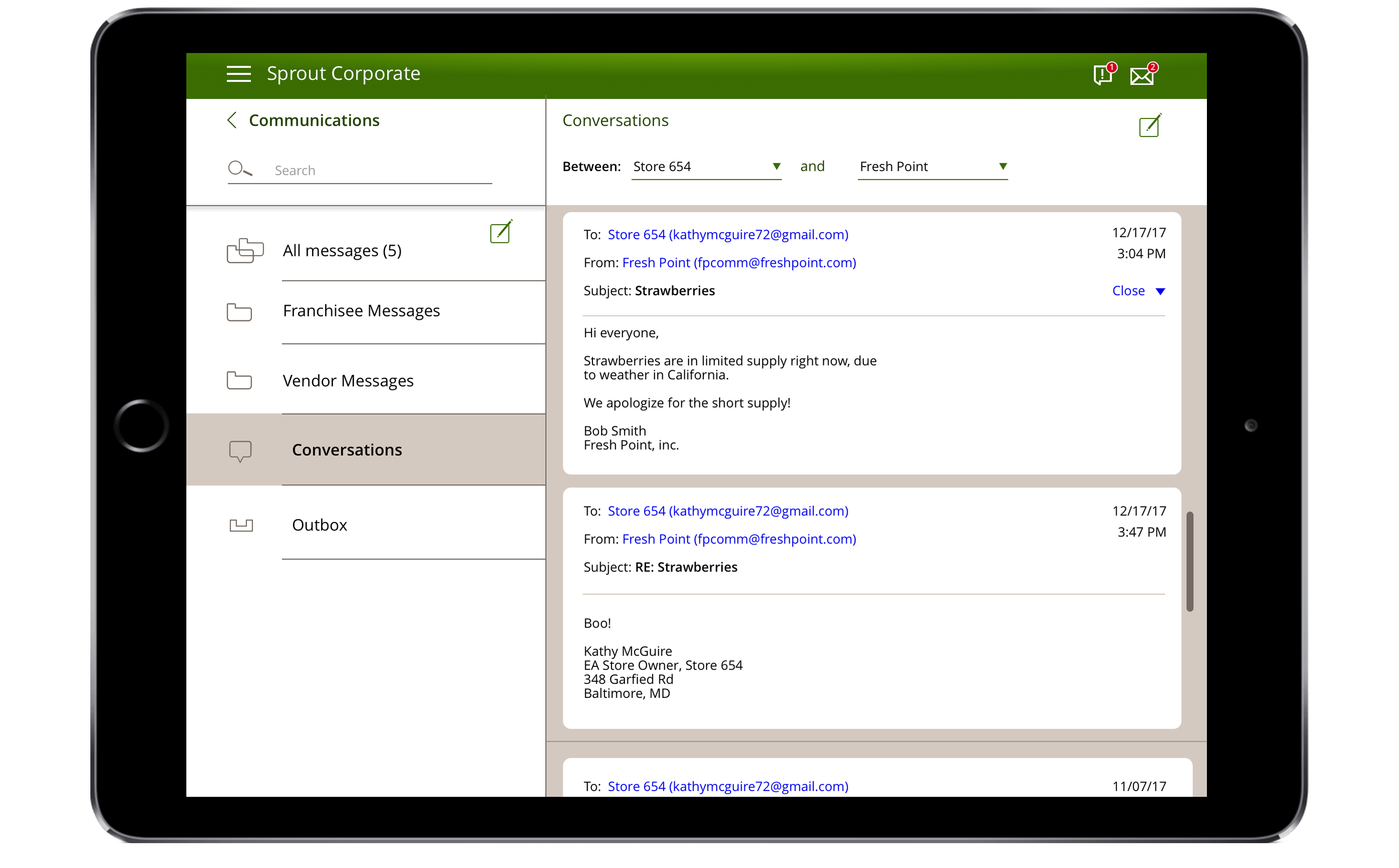
Sprout communications interface
Product Rejection
Sprout payment settings screen
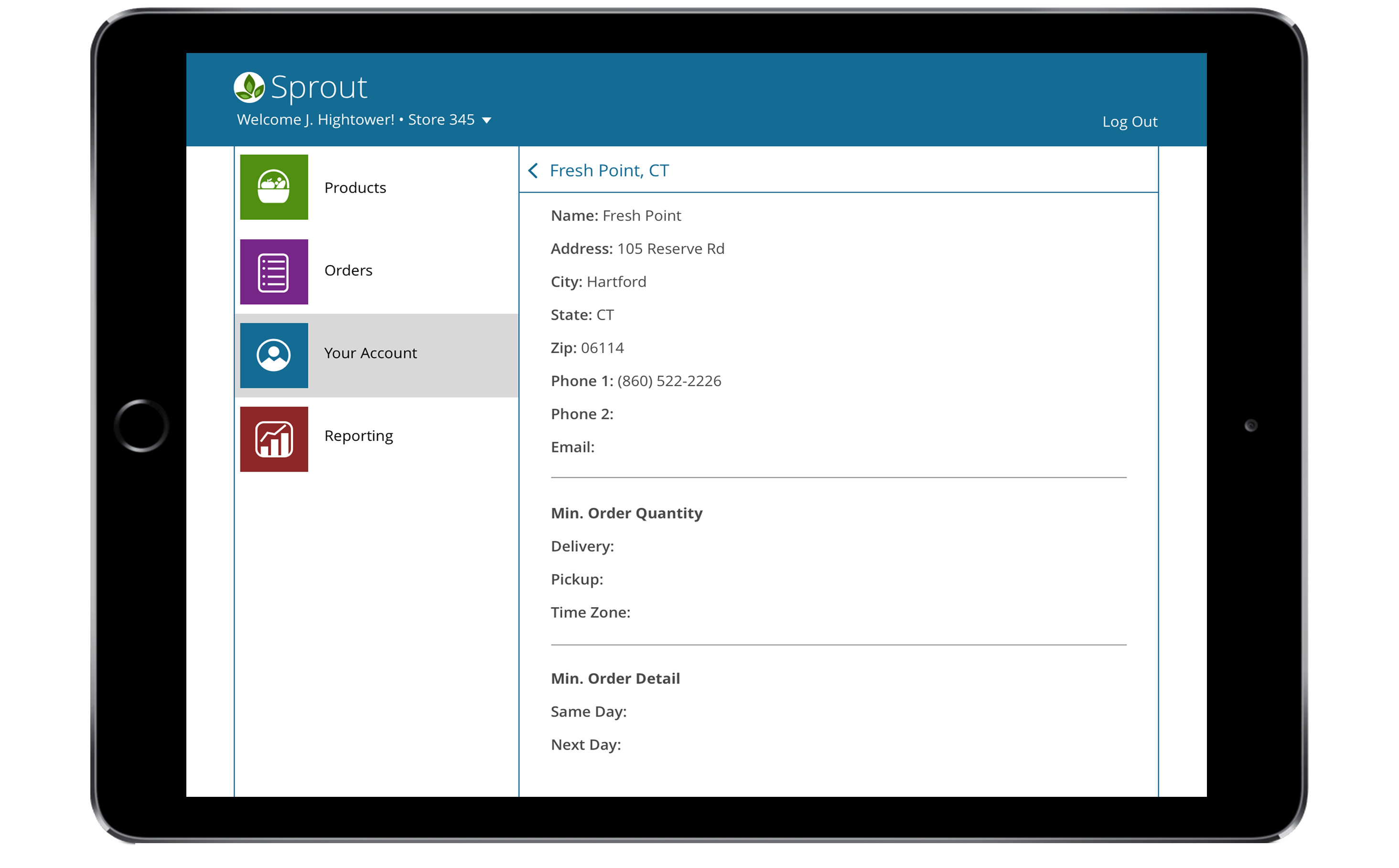
Account Info
Sprout payment settings screen
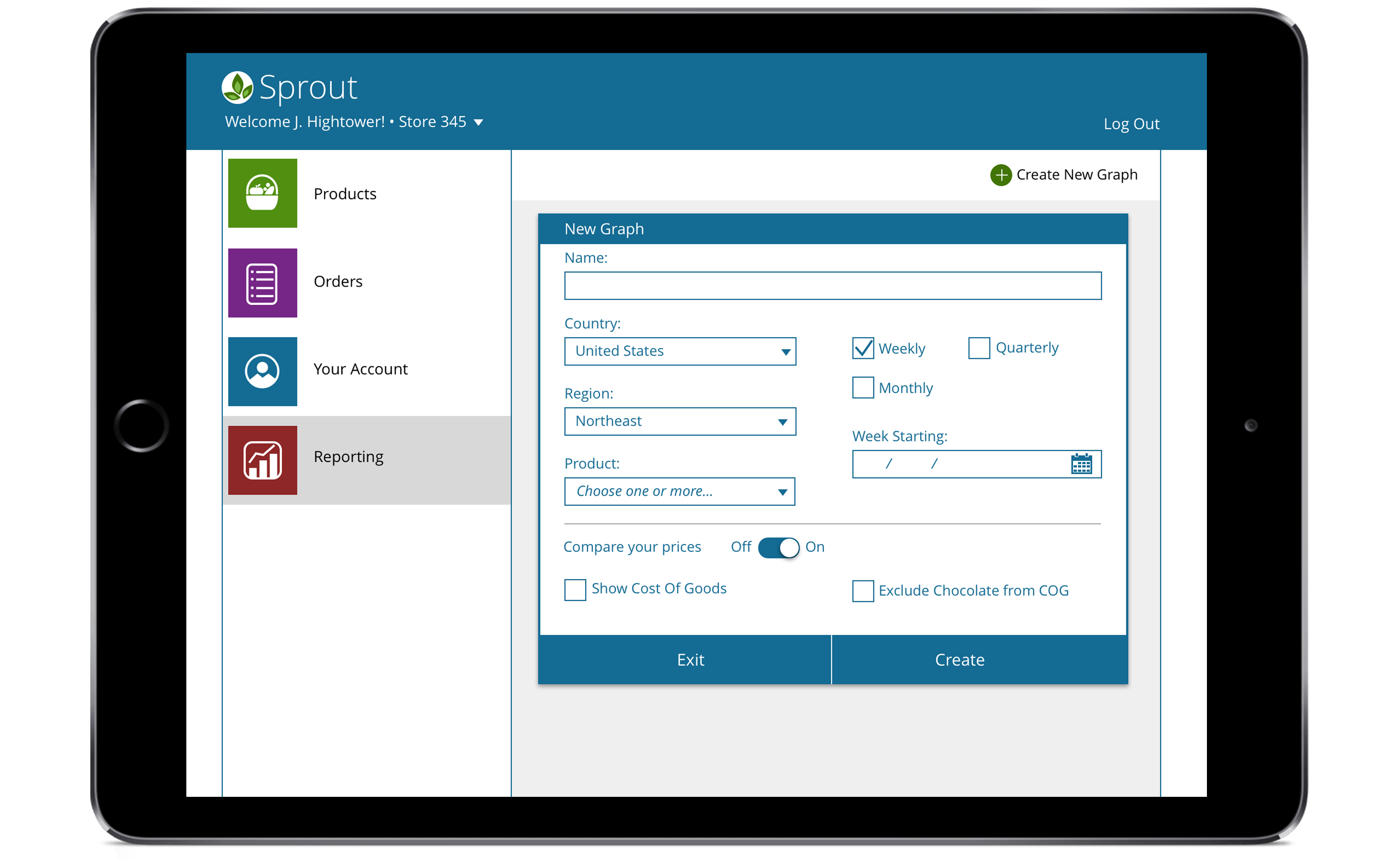
Reporting

Addressing Vendor Needs

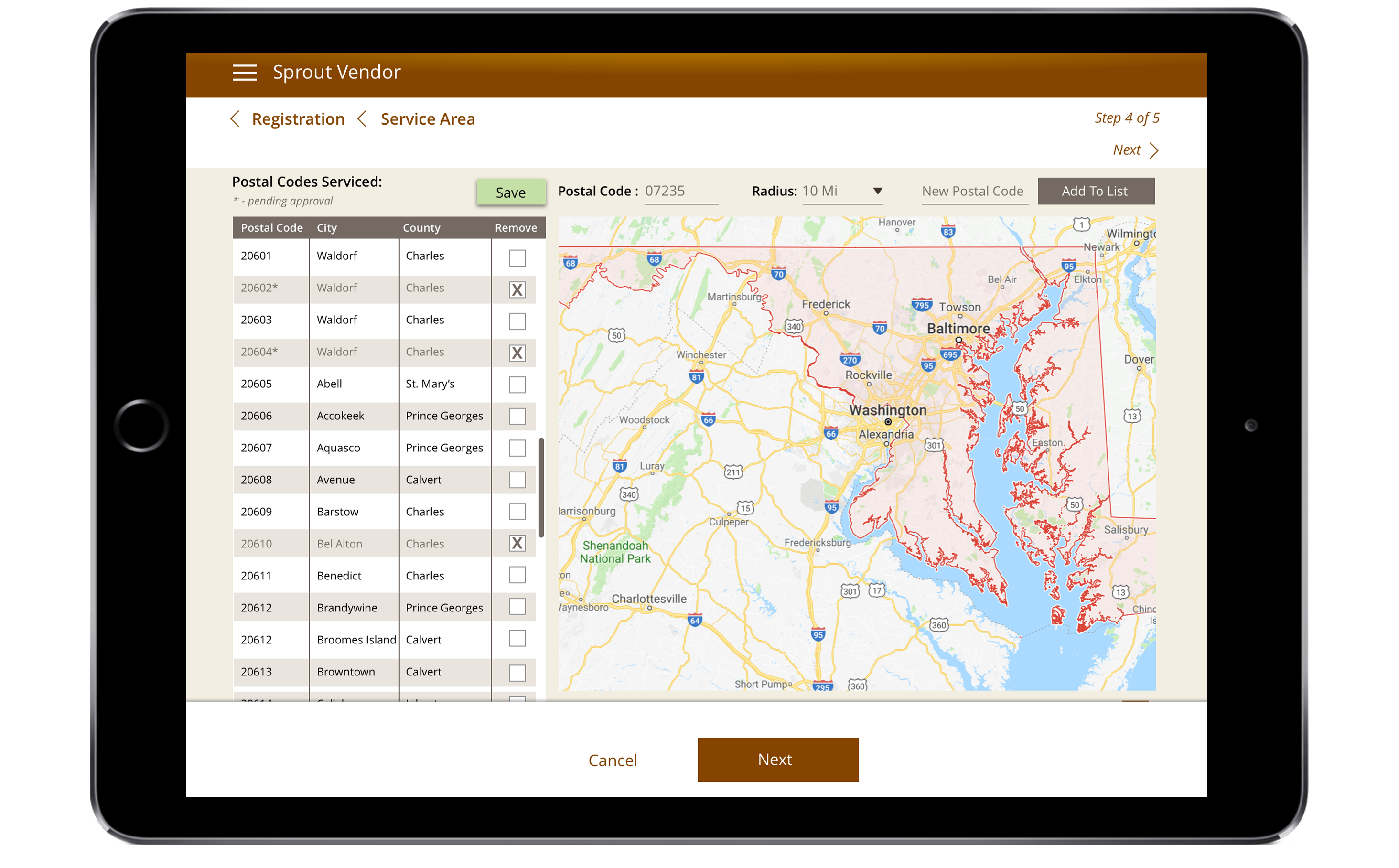
Managing service areas with delivery windows was a major pain point for vendors. We designed an interactive map-based tool that allowed them to easily redraw their delivery area and set specific delivery days and times for each region.
An order rejection flow was added to the store owner experience, allowing them to reject deliveries and attach photos to back up claims of produce conditions
Sprout vendor pricing management screen
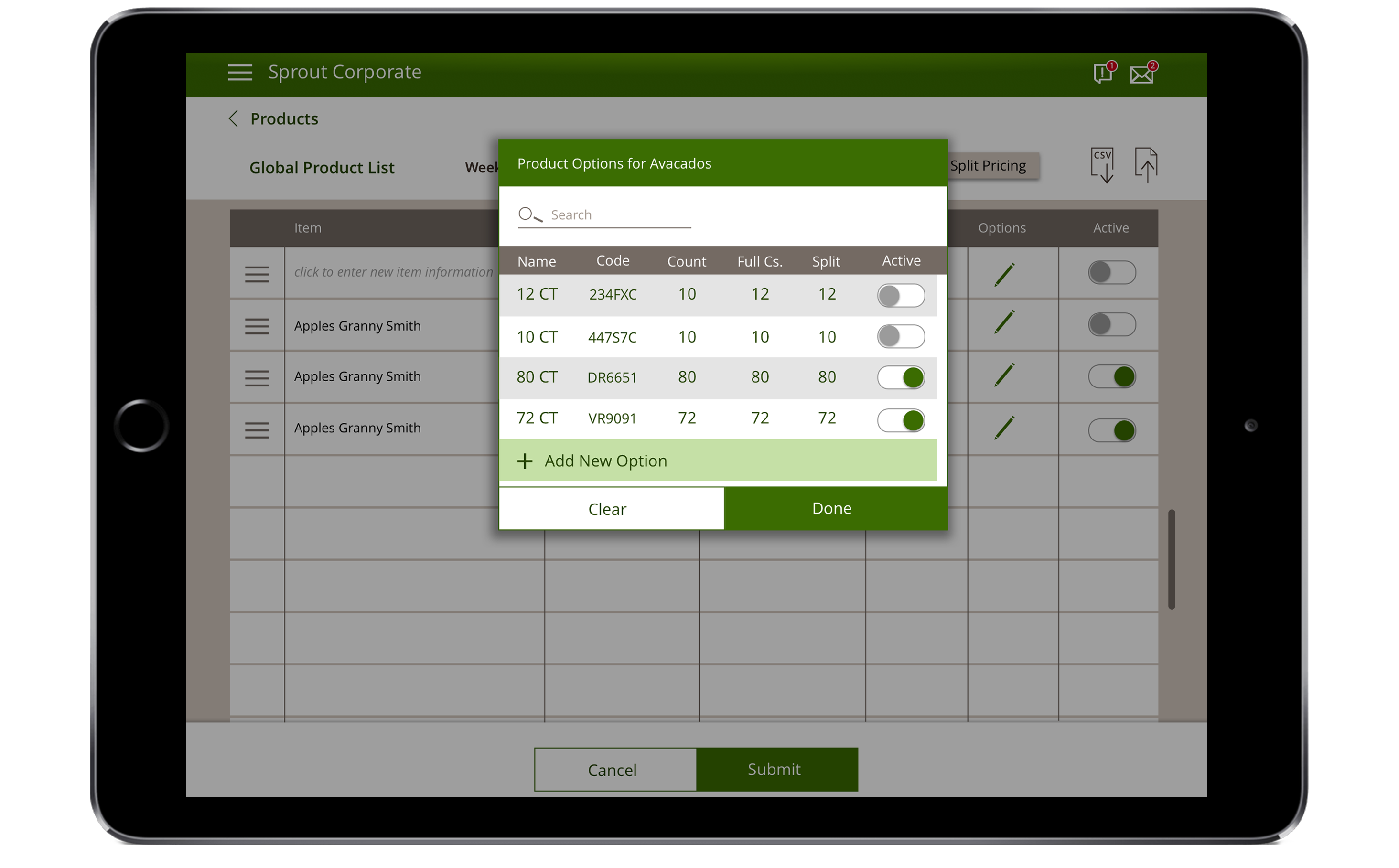
Manage products: pricing, split pricing, costs, codes, export CSV, add notes, see deadlines.
Set specific delivery days and times

Corporate Visibility

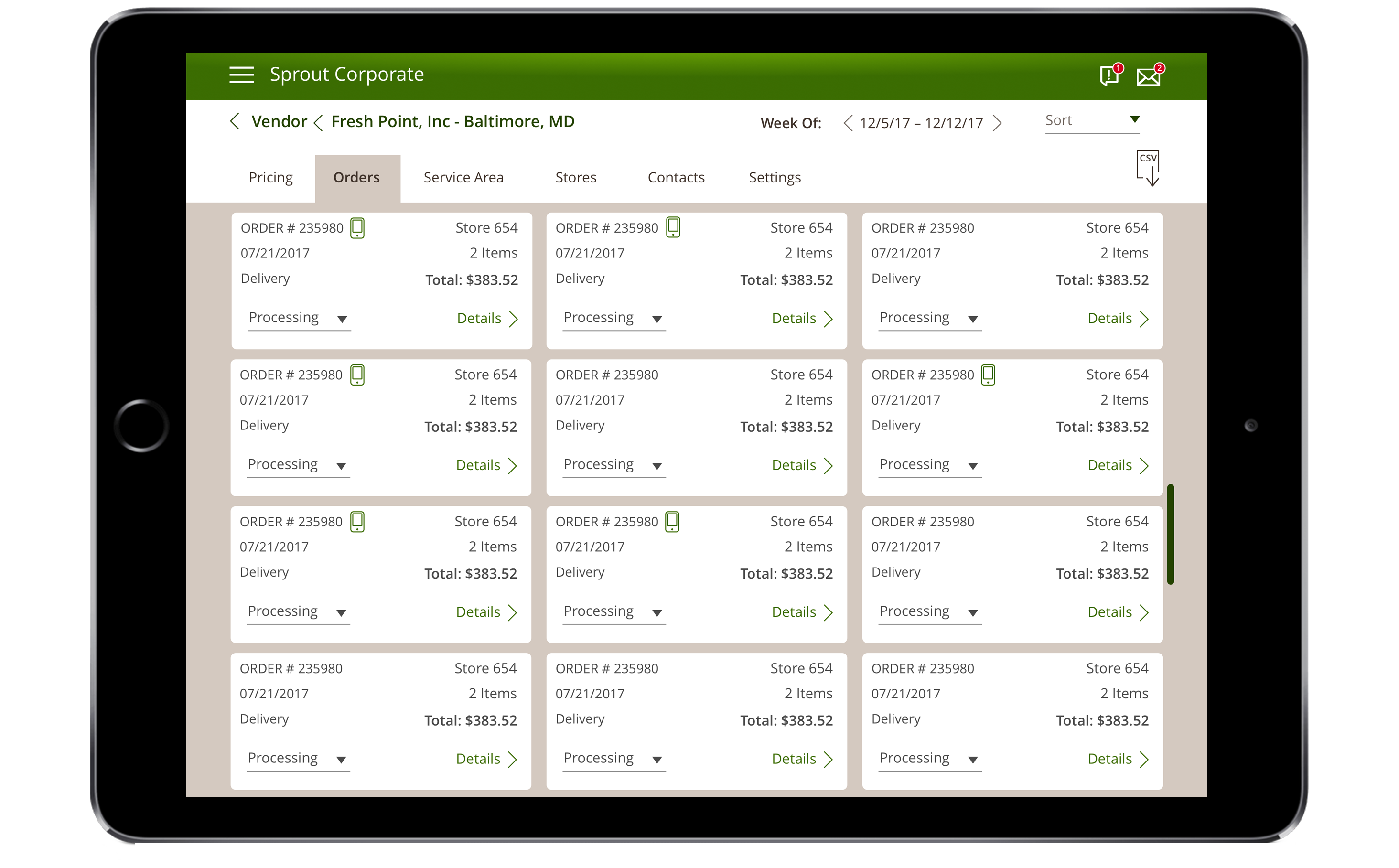
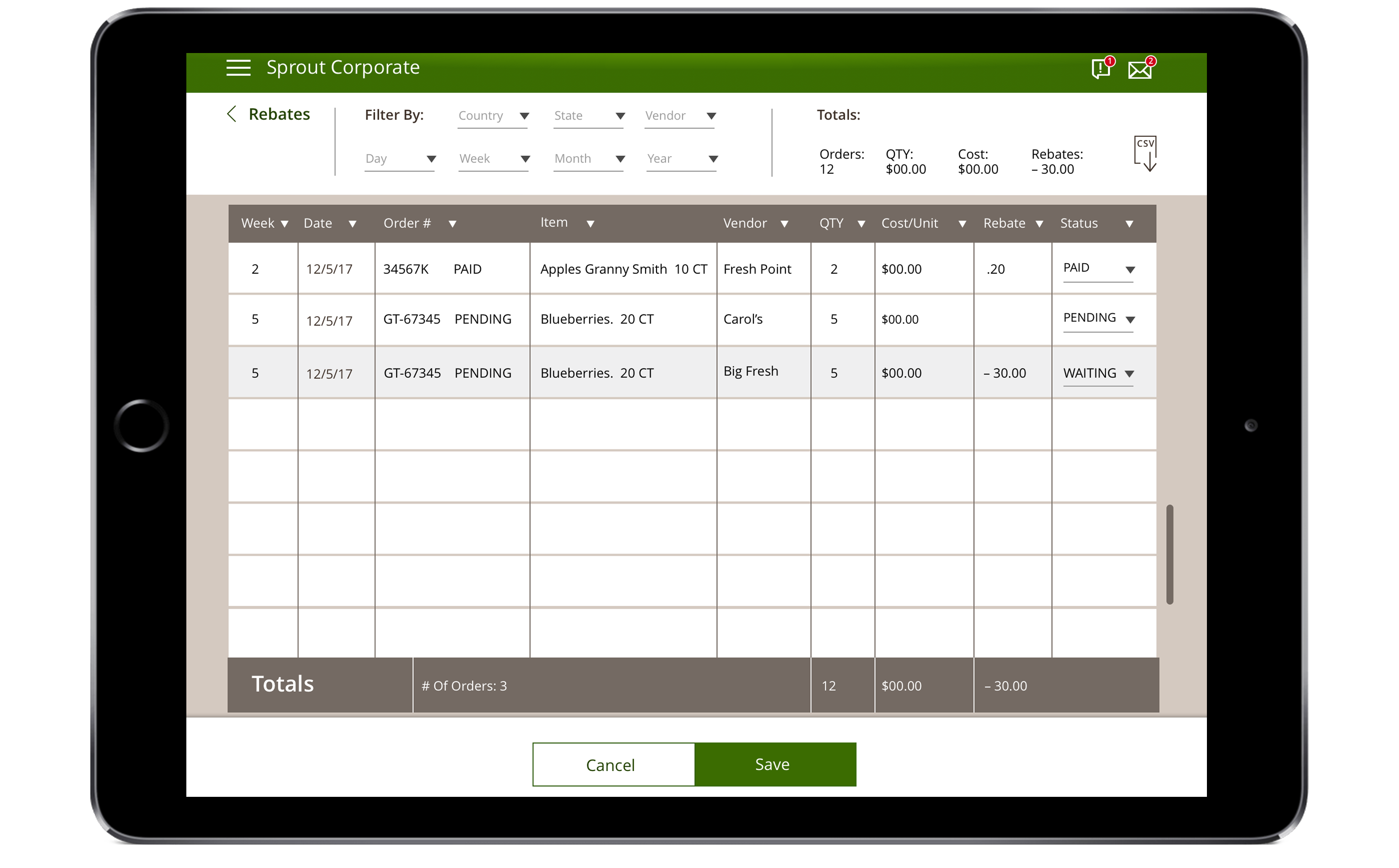
Corporate needed a birds-eye view of all vendor and store activity, with the ability to drill into specific accounts and make adjustments as needed. The dashboard we designed gave them that visibility and control, with robust filtering and CSV export/import for managing large amounts of data.
An order rejection flow was added to the store owner experience, allowing them to reject deliveries and attach photos to back up claims of produce conditions
See and track all orders from stores to vendors
Manage Global Product List
Edit product options and vendors
Send and monitor alerts and messages between vendors and stores. Resolve possible conflicts

Project Paused — Not Abandoned

The project was paused when Edible Arrangements undertook a major relocation of its headquarters to a new region. The platform had been designed and validated — all four user experiences fully conceived and prototyped. The work established a clear path to eliminating the $1M annual subscription and remains a strong example of end-to-end product ownership from research through multi-user-type UX design.